
FUSION @ UCI
KapeChat
ROLE
DURATION
TOOLS
TEAM
Context
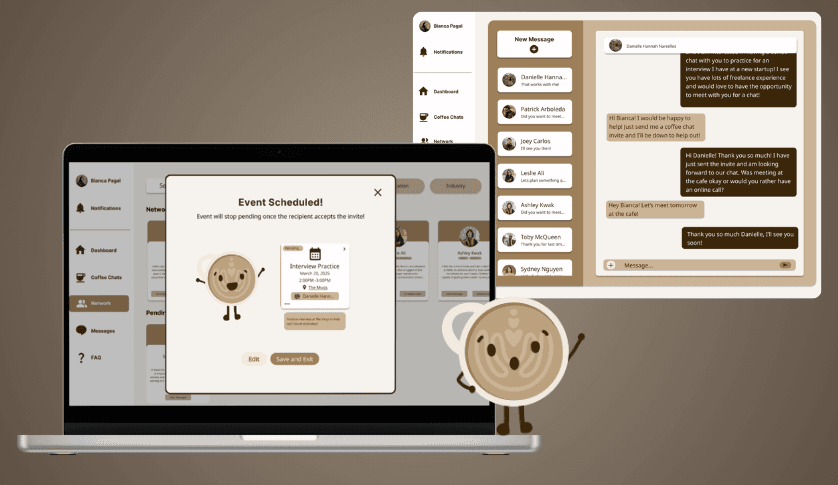
KapeChat is a web application to help students find mentors
As the Design Lead for the first cohort of FIP (FUSION ICS Project) leaders, I collaborated with a Development Lead and led a design sub-team in building a full-stack application to support the search for mentorship through in-app mentor matching and scheduling.
The Problem
Finding mentorship is difficult
The job market for college students is highly competitive, with key challenges including limited internship and new grad opportunities, delayed responses or being ghosted by recruiters, and difficulty in aligning student skills with employer expectations. As a result, students often feel disconnected and underprepared for entering their chosen industry.
How might we create a centralized, professional, and approachable mentorship platform that allows UCI students to easily discover and connect with mentors, while making mentorship accessible, personalized, and ongoing?
Research
We surveyed and interviewed 20+ UCI students to explore ideas of the job search and mentorship
Key Findings
52% of students struggle the most in receiving referrals from mentors
78% of students struggle with landing interviews in general
91% of students believe mentorship is important throughout the job search
"Being successful with my major is hard unless you have good connections for internships and healthcare IT departments. I think mentors would have the resources to guide me towards certain companies/healthcare facilities to get that first-off connections that many struggle to get at first."
— Student Interviewee
!!!
I realized students struggled most with forming connections to mentors and "human" aspects of the job search, such as interviews and hearing back.
These insights shaped our solution: a student-centered mentorship tool that lowers the pressure of starting conversations with mentors—KapeChat.
User Journey & Ideation
We mapped out core features with information architectures and flows
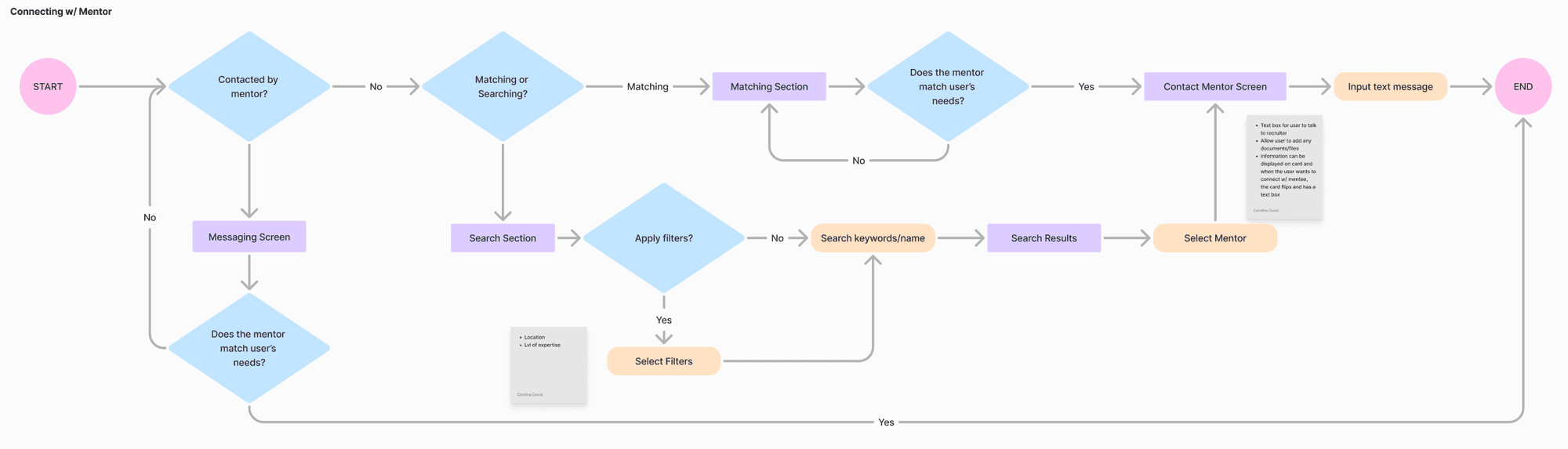
User flow to find and contact a mentor
Through brainstorming ideas for app names and branding, we took inspiration from the idea of "coffee chats" as a way to interact with mentors. We used this theme of coffee, along with the origins of FUSION as a Filipino-founded organization, to settle on the name KapeChat—with "kape" meaning "coffee" in Tagalog (the language of the Philippines).
Wireframing & User Testing
We tested early designs and iterated based on user feedback
We prioritized simplicity and usability with our low-fidelity sketches and refined features as we entered mid-fidelity wireframing. Through testing with a user-centered approach, we discovered our designs weren't as intuitive as we intended.
Scheduling Page
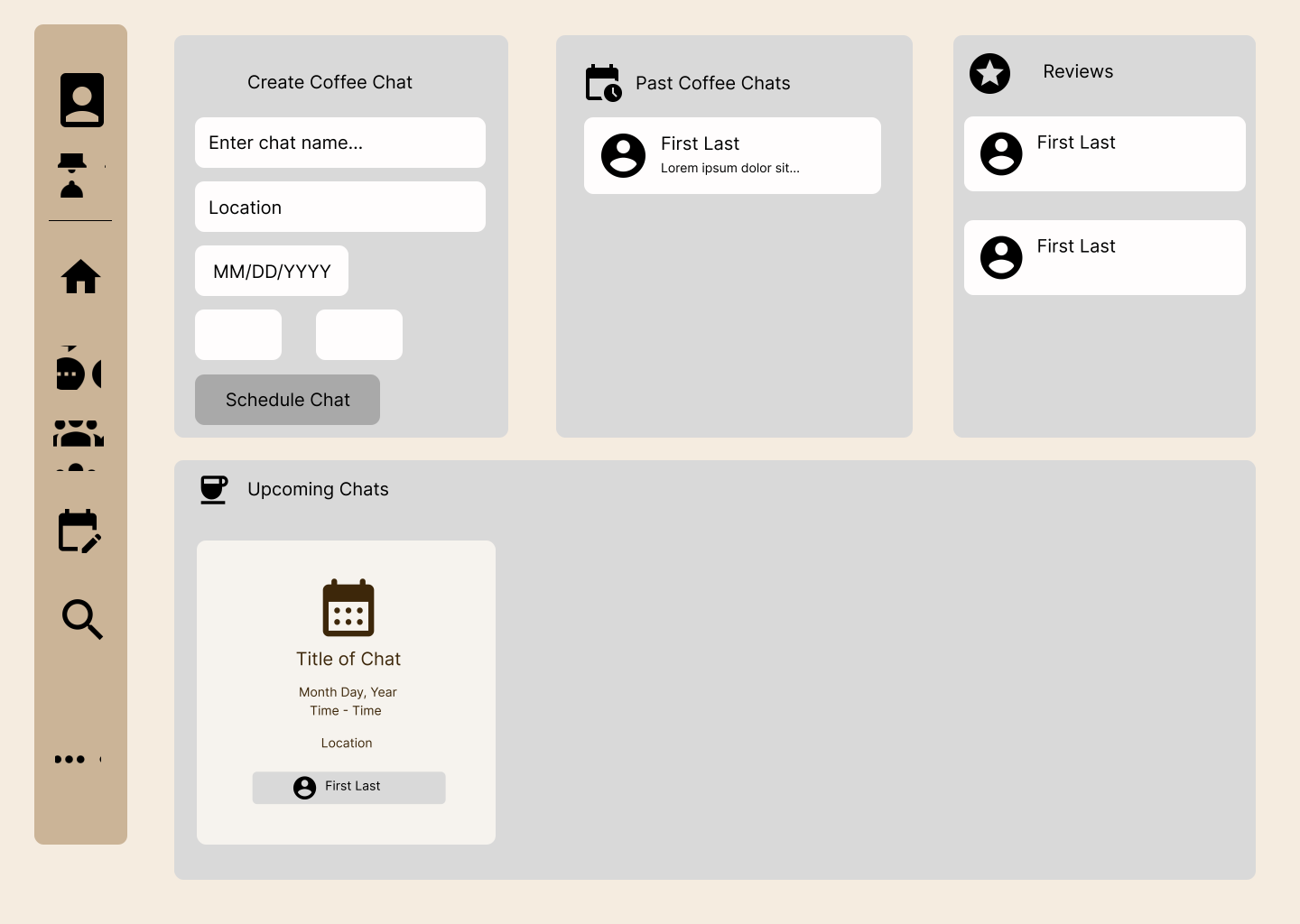
A whole page just for one feature (scheduling coffee chats) overcomplicates the process
Too many clicks to view scheduling page/not intuitive
Dashboard
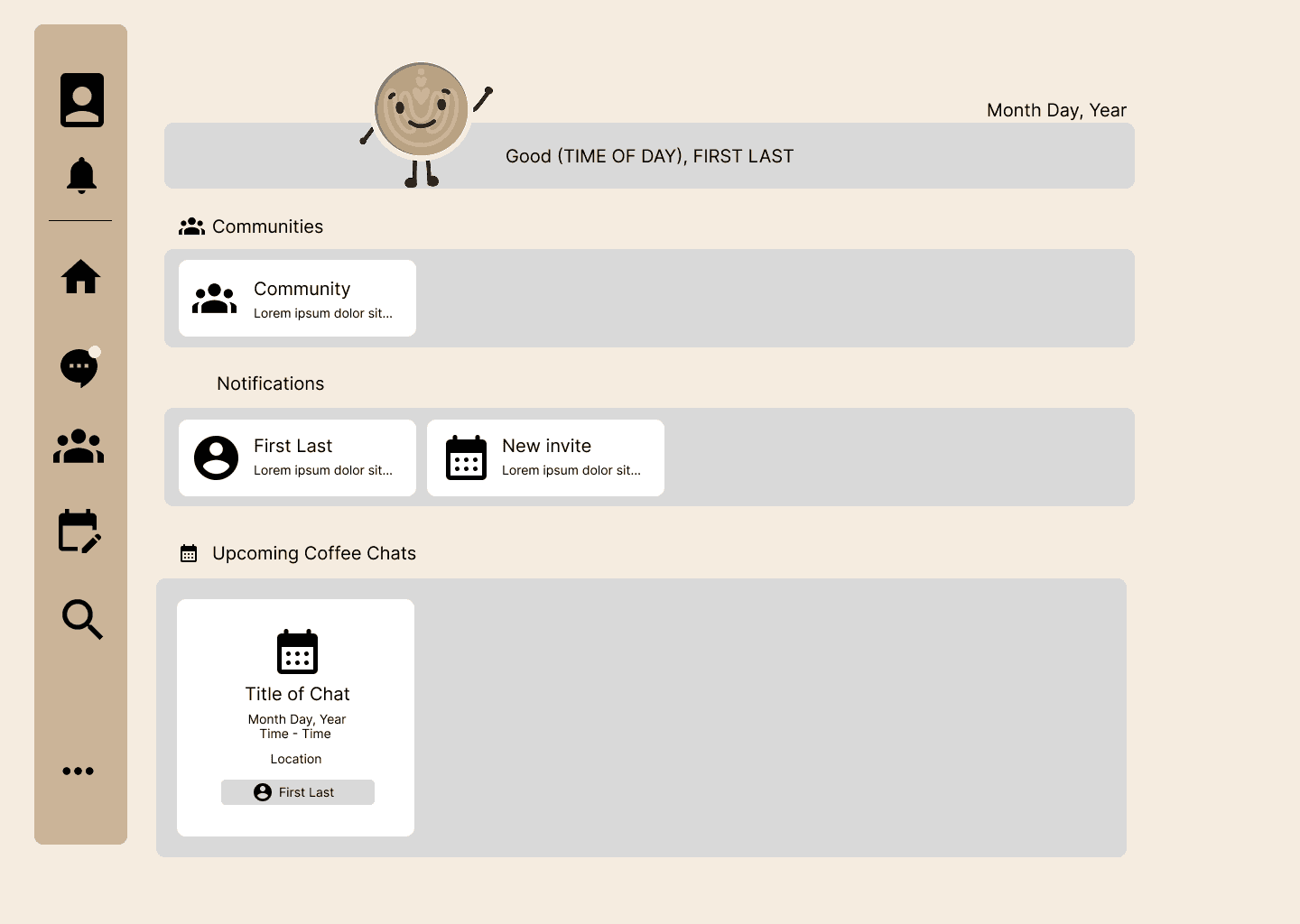
Simplified process for scheduling coffee chats within "Network" and "Messaging" sections, allowing for consolidation of pages
Viewing schedule from dashboard is more simple and accessible
We then transitioned to high-fidelity prototypes, utilizing a branding style with warm brown colors, coffee motifs, and clean fonts/elements—inviting yet professional. We continued to seek user feedback and conducted usability tests to see how our audience would respond to our application.
User Feedback
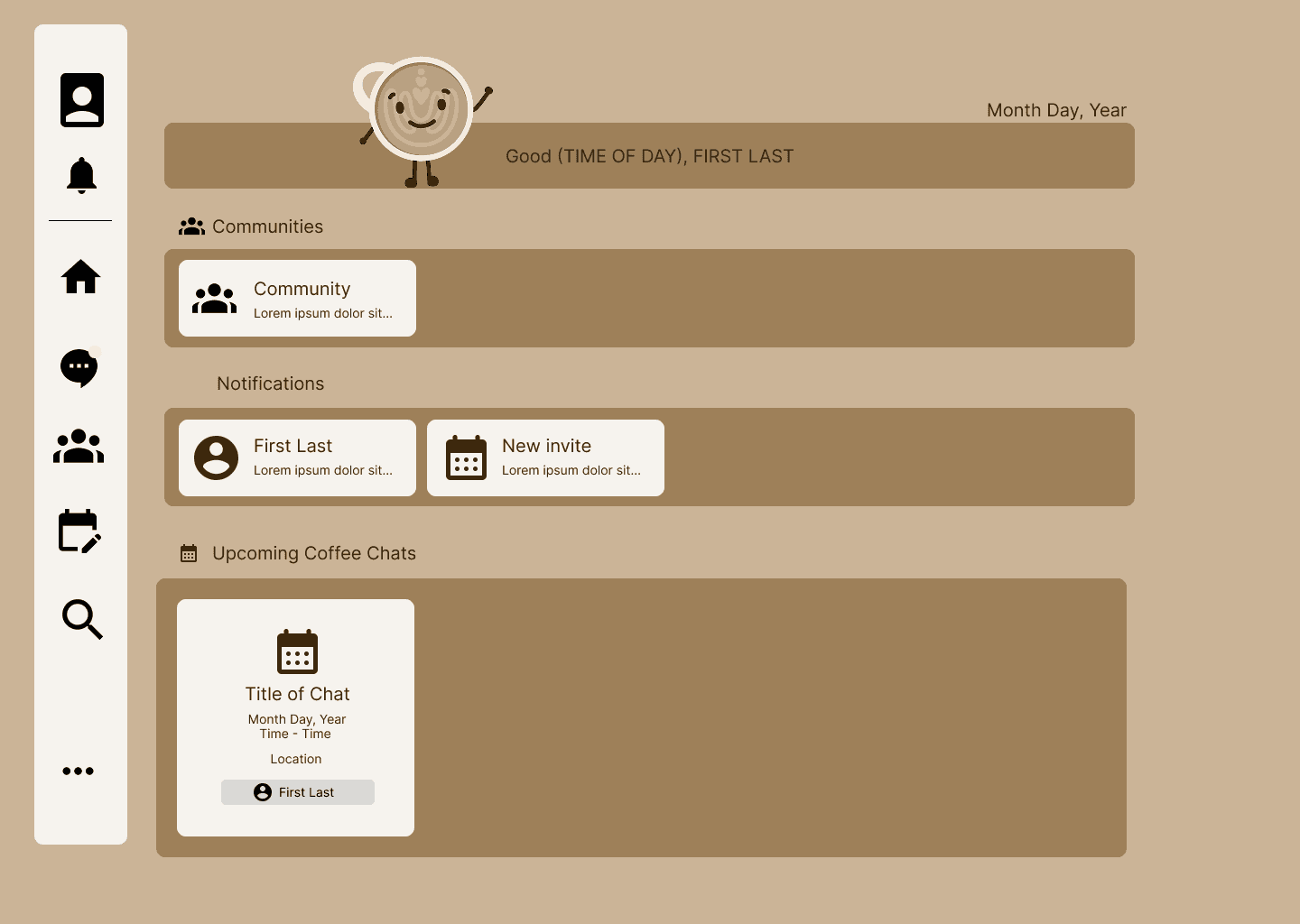
Color is too overwhelming and does not feel professional/clean
Navigation Bar is confusing due to features having no labels
New features were confusing due to ambitious layouts
!!!
Taking all of this feedback into account, I started to reiterate our branding style, components, and screens to make the user experience as friction-free as possible.
Features
Feature #1
COFFEE CHATS
With our Coffee Chat section, users are able to view mentors' profiles and request to message other users. To maintain security, a user’s contact information and resume on their profile are locked until both parties mutually message each other. This gives users the ability to find mentors who can match their needs and capability to contact them for potential coffee chats.
This feature allows users to directly communicate with potential mentors and spark meaningful conversations, which targets a struggle students had in finding a mentor in the first place.

Coffee Chat Functionality
Feature #2
COFFEE EVENTS
A Coffee Event is a meeting stored within the application. Users input the event name, recipient, location, date, time, and description. This invite is then sent to the recipient and shows on their dashboard, where they can accept it. Once users mutually message each other, they can then schedule coffee events.
Ultimately, this streamlines the process of planning when to hold a coffee chat without the need for back-and-forth messaging.

Coffee Event Functionality
We then wrapped up our designs and handed them off to the development team.
Outcome
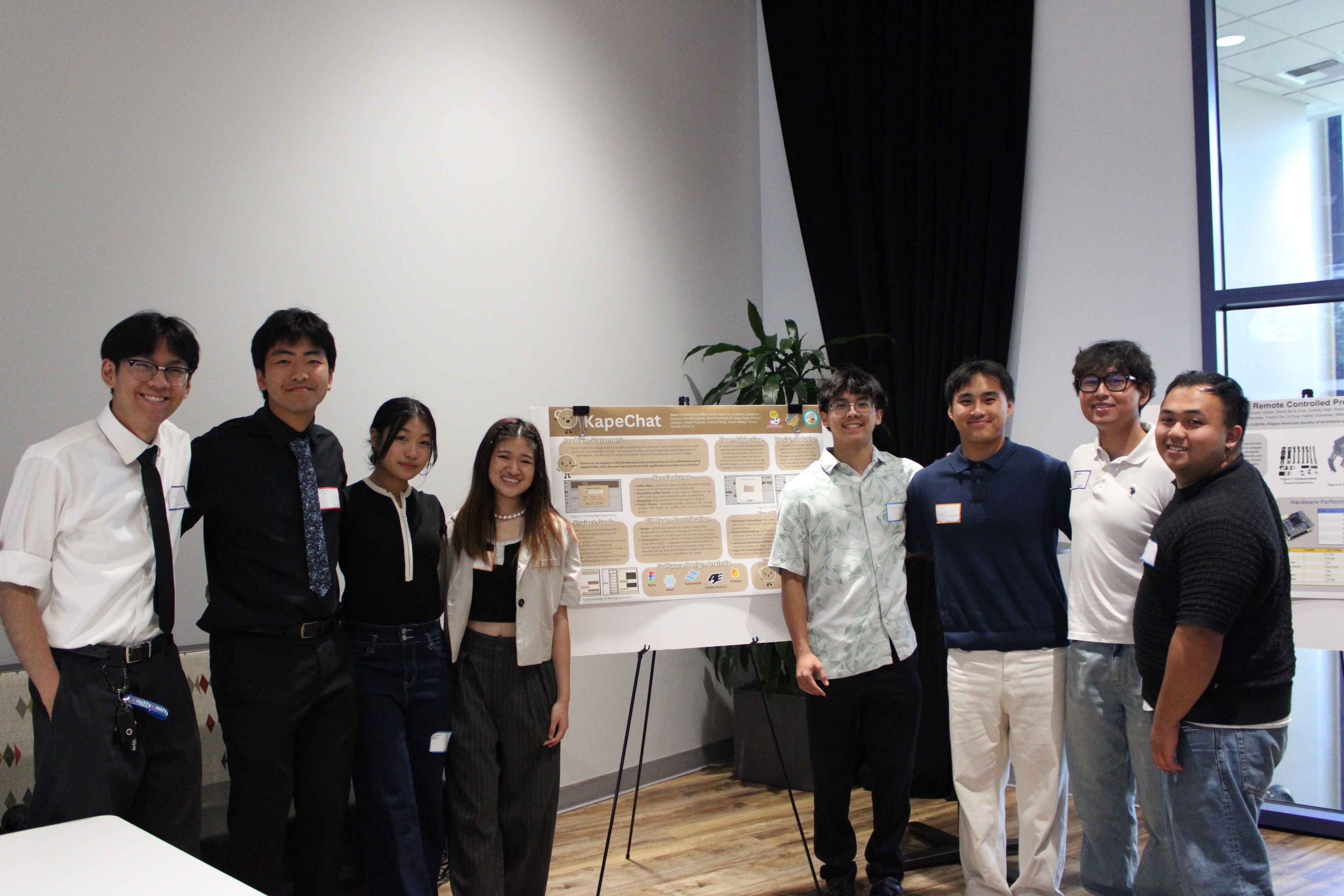
We received the Impact Award out of 5 competing teams
Our project was presented and awarded at the very first FUSION Con.
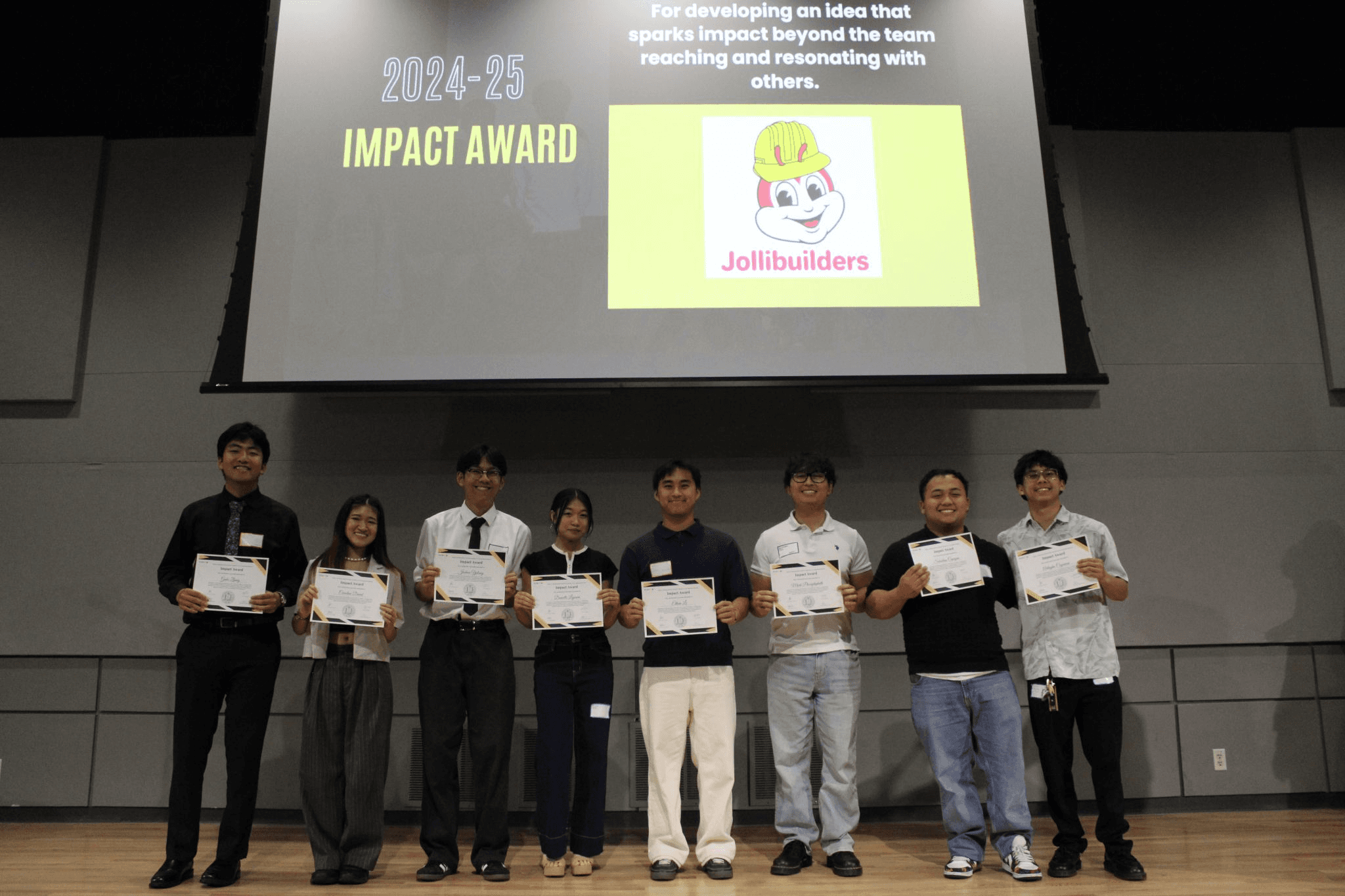
My team receiving the Impact Award
Reflection
Clarifying ambitions and timelines
Takeaway #1: Setting Clear Expectations
With this being my first time fully leading an agile design team, I learned the importance of setting expectations for all aspects of my team—developer lead and team included. Throughout the entire ideation, wireframing, and branding process, I needed to stay in constant communication with everyone to ensure my team was on the same page with features, functionality, and meetings.
Takeaway #2: Scoping with a Purpose
As we approached busy seasons, the team slowly lost motivation and became disorganized as deadlines were being extended to accommodate for members falling behind. I quickly learned the importance of sticking to a timeline and ensuring our scope is just the right amount of ambitious to be an innovative challenge, but also accomplishable.
I would like to thank my team for all the hard work they put into this project and my Developer Lead, Ethan Santos, for being a great sub-team lead. I would also like to extend a thank you to the FIP Directors for giving me the opportunity to guide a design team and for organizing the program.